Search
Starting Our Path
In early 2025, we engaged with a sustainability consultant, completed a materiality assessment and launched a series of bi-weekly working sessions to assess our current state, gather policies and baseline data and engage key stakeholders – including our Executive Committee in March. From there, we dove into foundational sustainability work:
- Tracking Scope 1 and 2 greenhouse gas emissions
- Monitoring water and waste use
- Setting goals to reduce our environmental footprint.
We are proud to share that we have received Bronze certification from EcoSchools Canada. This innovative program supports our commitment to environmental learning and climate action across all grade levels.
Through the certification process, we track and celebrate meaningful actions that reduce energy use and waste, raise environmental awareness and integrate sustainability into our everyday learning and teaching.
United Nations Sustainable Development Goals (SDG)
For the first time, we have aligned with five of the United Nations Sustainable Development Goals (UN SDGs) which will serve as a framework to guide and connect our activities across the school, providing clarity, consistency and purpose.
Good Health and Well-Being
Quality Education
Gender Equality
Climate Action
Life on Land
Sustainable Development Goal #3
Good Health and Well-Being
Lauremont promotes holistic well-being through physical education, school-wide athletics and dedicated mental health and guidance services that support emotional resilience and healthy lifestyles.
- Wellbeing curriculum (for lower and upper schools), committee and strategic plan
- Daily Physical Activity
- Mindfulness Time
- Outdoor Education
- Providing more outdoor time for students, a connection to nature

Sustainable Development Goal #4
Quality Education
Through our Montessori and IB programs, Lauremont delivers inclusive, high-quality education that fosters critical thinking, creativity, and a deep understanding of global issues.
- Individualized lessons and follow-ups to meet the needs of each student.
- Teachers guide students to reflect on their learning and set goals.
- Students are encouraged to be active participants in their learning.
- Emphasis is placed on developing 21st-century skills such as problem-solving, critical thinking and collaboration.
- Focus is on providing student agency and building student capacity to reflect on their actions, set goals and take responsibility for their learning.
- Connections to real-world contexts and applications.

Sustainable Development Goal #5
Gender Equality
Lauremont advances gender equality by fostering an inclusive environment, offering equal opportunities in leadership, sports, and clubs and supporting student-led initiatives.
- Women in Leadership
- Children have equal opportunities in all aspects of the school community- education, sports, extracurricular clubs, etc.
- Resources are used to foster discussions that support diverse perspectives. (Unlearn Posters)
- Discussions and study topics that promote understanding of diverse perspectives: Ex. Unlearn posters,
- Novel Studies (Fatty Legs, Stranger at Home)
- Social Justice Club- Lessons about stereotypes, fairness, rights

Sustainable Development Goal #13
Climate Action
Sustainability is integrated across the curriculum, with students leading and participating in climate-related projects, and environmental clubs.
- Environment Club
- Solar panels
- Butterfly garden
- Greenhouse
- Tree planting partnership with the town of RH
- Friends of the Community
- Gr6 leadership
- Eco Leadership Program

Sustainable Development Goal #15
Life on Land
Students engage in land stewardship through outdoor learning, tree planting, cleanups and biodiversity-focused initiatives that cultivate care for natural ecosystems.
- Lake St. George and Ravine Visits
- Outdoor education, visit to a field centre for hands-on, experiential
- Learning opportunities, and regular visits to the ravine to connect
- Learning to real-life contexts
- Clubs, gardens

EcoTeam and Environmental Club
Across both campuses, approximately 35 students in the EcoTeam and Environmental Club championed sustainability through hands-on leadership. Collaborating with staff, they organized battery drives, litter cleanups and garden projects, alongside major initiatives like the “No Lights at Lunch” campaign and food waste audits. By integrating Earth Day activities into the curriculum, these students actively fostered a school-wide culture of environmental responsibility.
Solar Panel Learning Program
Upper School students utilized the school’s real-time solar dashboards to bring energy concepts to life within geography and science classrooms. By analyzing daily output data, students explored complex topics like carbon footprints and the differences between grid and on-site generation. Through visual presentations and sustainability discussions, they transformed raw data into a deeper understanding of solar power as a tangible, real-world climate solution.
Lower School Highlights
(Toddler to Grade 6)
- Outdoor classrooms, raised garden beds and a shared courtyard provided hands-on learning environments.
- Nature play, planting and gardening were woven into the Montessori curriculum.
- Activities such as food awareness projects and waste audits fostered early environmental stewardship.

Upper School Highlights
(Grades 7–12)
- Students participated in sustainability-focused classes (e.g., IB Environmental Systems and Societies).
- Classes made use of the school’s ravine, green spaces, and courtyards for science, advisory and project-based learning.
- Tree planting and stream-based ecology projects engaged students in real-world environmental issues.

Sustainable Operations at Lauremont School
Solar Energy and Water
Food Waste
Procurement
Solar Energy and Water
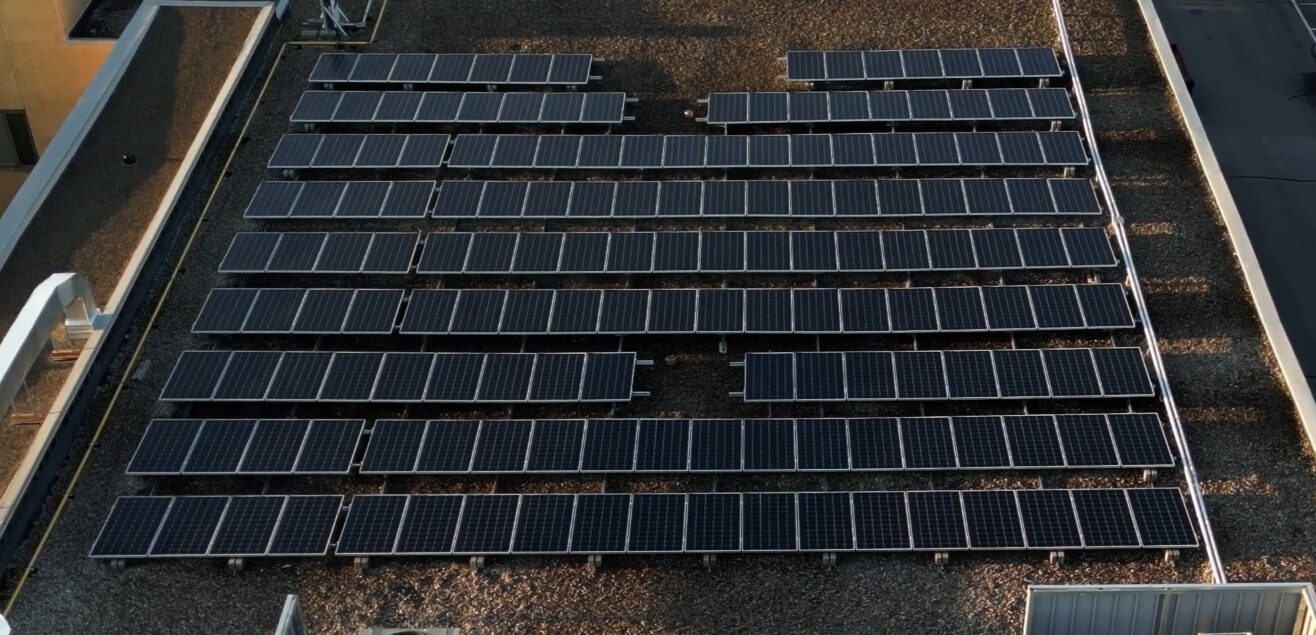
At Lauremont School, sustainability is integrated into how we run our campuses. We have targeted electricity reduction through LED lighting, automated HVAC systems and solar panels that contribute approximately 10% of our total power. Live solar dashboards allow students to engage with this renewable energy directly. Water conservation is equally prioritized through low-flow fixtures and Wi-Fi-enabled irrigation controls. Following a comprehensive 2025 water footprint audit, we use data to track usage trends and drive year-over-year reductions. These operational improvements support our EcoSchools certification and model climate stewardship for our students.
Food Waste
Waste Audit
To shape our future reduction efforts, Lauremont conducted a comprehensive waste review across both campuses between June 2024 and March 2025.
By analyzing pickup logs and bin volume, we calculated a baseline for our garbage and recycling output. We also manage organic waste through compost bins at the Lower School and a staff-operated electronic composter at the Upper School.
Student-Led Reduction
Our Lower School students championed the “take what you want, but eat what you take” campaign. Supported by staff and our food partners, ARAMARK Canada and Real Food for Real Kids, students tracked food waste over specific periods in October and March.
They weighed waste, utilized compost systems and shared the before-and-after results with their classmates to drive awareness.
Food Program Highlights
Zero-Waste Dining: We utilize reusable plates, cups and cutlery for all students, limiting single-use packaging to allergy-specific meals only.
Waste Diversion: Staff are encouraged to take leftovers home to prevent food waste.
Climate-Forward Menus: ARAMARK introduced “Climate Healthy Meals” educating students on how low-meat, locally sourced meals contribute to a lower environmental footprint.
Procurement
Lauremont School undertook a first-of-its-kind review of its top 25 suppliers by spend in 2024, evaluating whether these suppliers had publicly available Environmental, Social, and Governance (ESG) strategies. This project was led by staff, educators and a community sustainability consultant (ThisRock Inc.) to support our commitment to sustainable procurement.
We wanted to understand how many of our top suppliers care about the same things we do, like climate action, fairness and responsible business. This was the first of many steps toward spending our dollars with like-minded businesses in our community.


Student-Led
We empower passionate students and change agents through dedicated mentorship. While we will always educate students on topics to build a base of knowledge, ideas and initiatives will stem from student interest and ideation

Social Innovation
To promote and instill a mindset of innovation and service in our approach to teaching and learning, that is anchored within our school environment but is most impactful as learners contribute to positive social change.

Sustainable Operations
We are committed to sustainable practices that secure the long-term well-being of present and future generations, including tangible innovations on campus and providing professional development for our teachers to support these goals.